Amazon-Ready Postpartum Kitchen Essentials: The Complete Guide
Last updated: August 12, 2026
Quick Answer: 7 core items are enough for most homes starting an amazon-ready postpartum kitchen essentials — complete guide setup: a lidded insulated bottle, microwave-safe containers, a snack basket, easy-clean dishes, one meal helper, a drying rack, and a bottle brush. Stocking an amazon-ready postpartum kitchen without a pile of shiny extras you’ll never use? Start here. The most practical setup is the one that keeps one-handed food, hydration, and cleanup close by during the first few weeks home. I write about postpartum recovery and baby-care prep from a practical, parent-first angle, and this is the checklist I would use when sleep is broken and your hands are full.
Key facts
- 7 items cover most early postpartum kitchen needs.
- 1 insulated bottle can support hydration all day.
- 3 tasks matter most: eat, drink, and clean up with less effort.
- 2 reliable sources to check: ACOG postpartum care guidance and CDC food-safety guidance.
- 1 rule keeps buying simple: choose items you can use and wash one-handed.
Amazon-Ready Postpartum Kitchen Essentials: What Actually Needs to Be in Reach
Cute? Sure. Useful at 2 a.m.? Different story.
The real question isn’t “What’s cute for postpartum?” It’s “What keeps me fed, hydrated, and sane when I can’t stand at the stove very long?”
To build an amazon-ready postpartum kitchen essentials — complete guide around five jobs, I’d focus on hydrate, eat with one hand, heat food fast, store leftovers safely, and keep the sink from becoming a second job. The Amazon-ready part matters because the goal is not endless browsing. It’s to pick a few reliable items, save them, and order when you’re ready.
I’d begin with:
– a large insulated water bottle or tumbler with a lid
– a snack basket for the counter or table
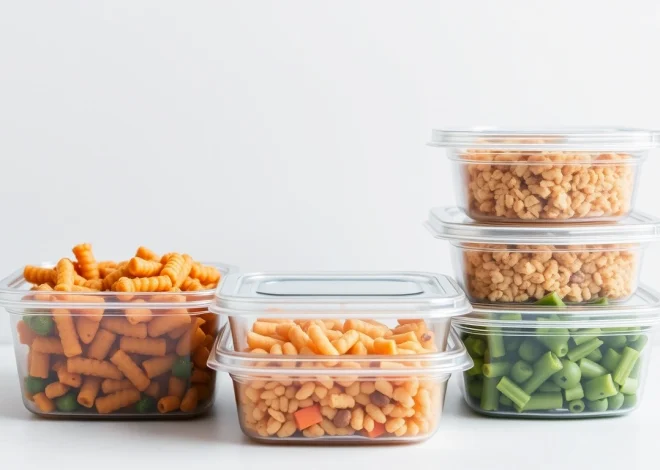
– microwave-safe containers for leftovers and freezer meals
– a few easy-to-clean plates, bowls, and cups
– a kettle, slow cooker, or microwave-friendly meal helper, depending on your cooking style
– dish tools that reduce friction: a bottle brush, drying rack, and maybe disposable or compostable backup supplies if that fits your values
Generic lists often miss the point. They lean hard on “postpartum self-care” items that sound thoughtful but don’t actually save time. A silk eye mask is nice. A lid that stays on your water bottle at 3 a.m. is useful. And honestly, a snack basket beats a drawer full of granola bars that gets buried behind oat milk.
Amazon helps because the selection is huge and replacement buying is quick when you realize something is annoying in your actual kitchen. Still, I’d compare across retailers before clicking buy. Many of these same basics are sold at Walmart, Target, Best Buy for kitchen electronics, or directly through brand sites. That matters because the right choice is often the one with the right lid, size, or material — not just the lowest price you happened to see first.
For safety, I’d keep one additional rule in mind: anything you use for heating, storing, or preparing food should be simple enough that you can clean it well even when you are tired. If you need help choosing safe postpartum nutrition or have dietary restrictions after birth, check with your clinician or a registered dietitian.
For authoritative guidance on postpartum recovery and self-care, the ACOG postpartum care guidance is a good starting point, and the CDC food-safety guidance matters when you’re batch-cooking and storing leftovers.
The Real Difference Between Convenience Gear and True Kitchen Essentials
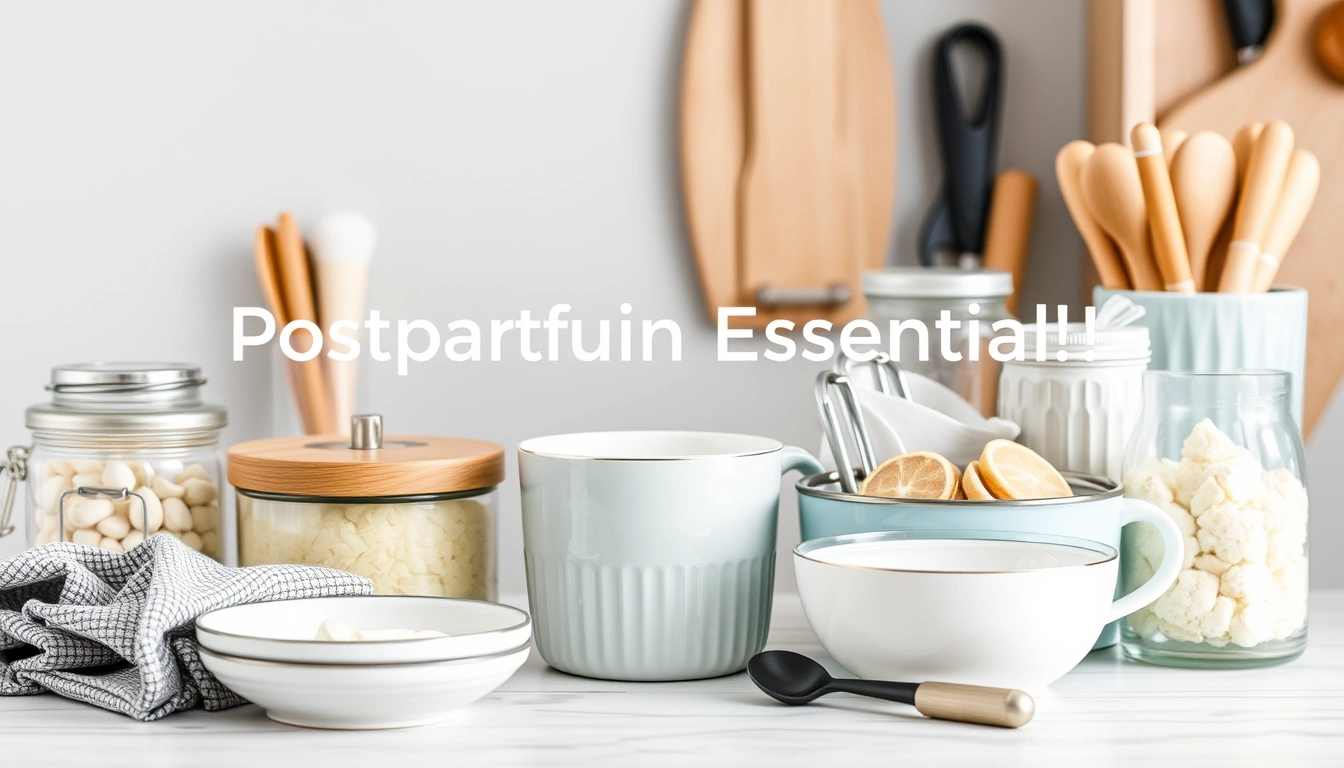
Convenience gear wins on your worst day. True kitchen essentials win every day after that.
That’s the dividing line I use when sorting postpartum kitchen items. Convenience gear is the special thing that solves a narrow problem: a countertop bottle warmer, a fancy organizer, a temperature-control mug, a dedicated snack caddy. Essentials are the pieces that keep working when your routine is messy: containers, a reliable bottle, plates that stack well, easy-open lids, and a system for making and storing food.
Only one category gets my money if I had to choose, and it is essentials. They are less exciting and far more forgiving. A stainless steel tumbler works whether you’re nursing, pumping, bottle-feeding, or just surviving on sips between naps. A good lidded container handles soup tonight and chopped fruit tomorrow. A basket on the counter can hold crackers, fruit, bars, and electrolyte packets without asking for a new habit.
Convenience gear can still earn its place, but only when it removes a repeated pain point. A kettle is the classic example. If you make tea, oatmeal, ramen, or formula water often, it may justify the counter space. A slow cooker can also be worth it if you like dump-and-go meals. But I would not buy a gadget just because it appears on a postpartum registry list. Overbuying has a simple payoff, and it is not a good one: more clutter, more dishes, more decisions, and more cleaning when you are least able to carry that load.
The amazon-ready postpartum kitchen essentials — complete guide approach is not about building a “nursery kitchen aesthetic.” It is about cutting the number of times you must think, stand, or wash. So choose things that survive being used badly, used one-handed, and used while distracted.
The Honest Side-by-Side
Here is the buying decision in plain language: prioritize durable basics first, then add one or two convenience items only if they solve a problem you already know you’ll have.
| Criteria | Convenience Gear | True Kitchen Essentials | Winner for [condition] |
|---|---|---|---|
| Speed at mealtime | Can be very fast if it matches your routine | Fast once set up, but less flashy | Convenience gear for very frequent reheating |
| Usefulness across feeding methods | Often tied to one task | Works for nursing, pumping, bottle-feeding, or solo meals | True essentials for mixed-feeding households |
| Counter space | Can be bulky or single-purpose | Usually stackable or tuck-away friendly | True essentials for small kitchens |
| Cleaning burden | Sometimes more parts, more friction | Usually easier to rinse, stack, and wash | True essentials for low-energy days |
| Budget flexibility | Easy to overspend on “nice-to-have” features | More likely to cover basic needs first | True essentials for budget-focused buyers |
| Comfort during long stretches at home | Can improve mood if it solves a real annoyance | Supports routine without extra fuss | Convenience gear for high-use pain points |
| Replacement risk if it breaks | Higher frustration if it becomes a habit item | Easy to swap out because the role is familiar | True essentials for lower-risk planning |
| Best fit for postpartum reality | Good only when the problem is specific and repeated | Better match for the messy, changing early weeks | True essentials overall |
The heart of the decision is that table. If your kitchen already runs smoothly and you just want one item to make hot drinks easier, convenience gear can be a win. If you need a system that handles interrupted meals, sleep deprivation, and random hunger, the basics win because they do more jobs.
Generic advice gets this wrong by treating every postpartum home like a spa weekend. It isn’t. If you have a medical or dietary concern after birth, consult your clinician or a registered dietitian, because your kitchen has to work when the baby is crying, when you’ve forgotten what time you last ate, and when the sink has somehow filled up again. Ugly? Yes. Real? Also yes.
Convenience Gear: Who Should Actually Use This and Who Shouldn’t
Convenience gear wins here — specifically for parents who already know their bottleneck and want to solve it fast.
For the person who drinks hot tea, coffee, or broth all day and hates cold resets, a temperature-control mug or a good kettle can be worth it. If your oven is slow but your microwave is easy, microwave-safe prep containers and a food cover can save time and cut mess. If you rely on batch-cooked meals, a slow cooker can keep dinner from turning into a last-minute scramble.
What convenience gear does well:
– reduces steps in a repeated routine
– makes one specific task less annoying
– can help you eat or drink more often because the path is shorter
The trade-off is that these items can be too specific. A bottle warmer is great if you need one often and annoying if you don’t. A fancy organizer looks helpful until you realize it just moves clutter from one place to another. A bad convenience buy is not just wasted money; it is another object to clean, store, and mentally maintain.
I would skip convenience gear if you have:
– a tiny kitchen with almost no counter space
– no clear sense of which task is actually hard for you
– a habit of abandoning single-purpose gadgets after the novelty wears off
– a postpartum budget that needs to cover basics first
What I like about keeping this category narrow is that it stays honest. You do not need every viral kitchen helper on day one. You need the item that removes a repeated irritation you can already name.
For many people, that means just one or two things. Not a cart full.
True Kitchen Essentials: The Specific Situations Where It Wins
True kitchen essentials win for almost everyone because they solve multiple problems at once.
This is the category I would build first if I were helping someone set up an amazon-ready postpartum kitchen essentials — complete guide from scratch. The best examples are boring in the best possible way: a solid insulated bottle, microwave-safe containers, a stack of plates and bowls that are easy to reach, and a snack system that doesn’t depend on memory.
Why this category wins:
– It supports the whole family, not just the postpartum parent.
– It works for leftovers, batch meals, snacks, and hydration.
– It stays useful long after the newborn stage ends.
The practical benefit is flexibility. You might think you need “postpartum items,” but in reality you need fewer barriers between you and food. A stack of shallow containers makes it easier to portion leftovers. A wide-mouth bottle is easier to fill and clean. A small counter basket keeps packaged snacks visible, which matters when your brain is tired and your body is asking for food now.
The downside is plainness. A good set of containers does not feel like a treat, and that is fine if they are microwave-safe and easy to clean. A drying rack does not feel exciting. But excitement is not the job. The job is to keep you from skipping meals or making extra work.
I would prioritize these essentials if:
– you are in the last weeks of pregnancy and want a one-time setup
– you have limited kitchen storage
– you expect help from friends or family who may bring food
– you want items that can move from postpartum use into everyday life
The only people who should skip a heavy essentials-first approach are those who already have a well-stocked kitchen and just need one targeted helper. If that’s you, buy the helper and stop. A postpartum kitchen does not need a full makeover to be useful.
For food safety and storage, the U.S. Department of Agriculture’s Food Safety and Inspection Service has clear guidance on leftovers, refrigerator timing, and reheating. That matters more now because half-finished meals tend to sit around longer when life is disrupted. See the USDA FSIS leftovers guidance.
The Amazon-Ready Postpartum Kitchen Essentials I Would Prioritize First
Narrowing this to a real shopping list? I’d start with the items that change daily life the most. I’m not listing them as a “must buy everything” stack. I’m putting them in order of usefulness.
-
A large insulated water bottle or tumbler with a secure lid
This is the single best postpartum kitchen purchase in my view because hydration is constant. The lid matters more than the finish. If the lid leaks, the whole item becomes irritating fast. Look at Amazon, brand sites, and big-box retailers so you can compare lid style and cup size. A 24- to 32-ounce bottle is a practical target for many people. -
Microwave-safe food containers with lids
These beat random takeout containers because they can move from fridge to microwave and back without turning into a guessing game. Choose ones that stack cleanly. The drawback is that cheaper lids can warp or feel flimsy, so read the material details carefully. A 3- to 5-container set is often enough to start. -
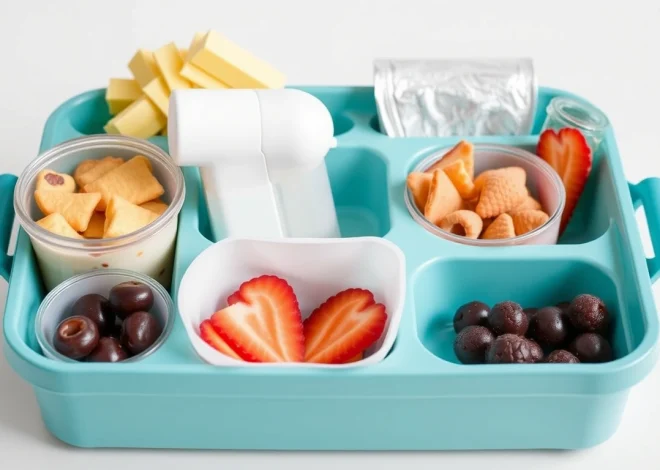
A snack basket or open bin for the counter
This sounds silly until you’re hunting for food with one free hand. Keep shelf-stable snacks where you can see them. The downside is clutter creep, so I’d limit it to a single basket, not a full display. One basket, one shelf, one job. -
A few easy-wash plates, bowls, and cups
You do not need a full matching set. You need dishes that are easy to grab, hold, and rinse. If you already have these, do not replace them just because they are not “postpartum.” Two or four of each is enough for a small reset. -
A kettle, slow cooker, or microwave helper, depending on your habits
This is where convenience gear can enter. A kettle helps if you want hot drinks or quick oatmeal. A slow cooker helps if you batch-cook. A microwave cover helps if splatter cleanup is your enemy. Choose one that actually fits your routine, and remember that a simple $15 to $40 helper can be more useful than a flashy gadget. -
A drying rack and bottle brush
These are deeply unglamorous and still worth including. If dishes pile up, your kitchen becomes harder to use. A drying setup that saves counter chaos has real value. A bottle brush is cheap, and a basic rack can last for years. -
Backup paper goods, if that fits your household
I would not frame disposable plates or cups as a universal answer, but a short-term backup can keep life easier during the early days. The trade-off is waste and cost, so this is a temporary support, not a forever plan.
The common thread is simple: choose items that lower friction without adding complicated care instructions.
Our Verdict: Which One to Choose and Why
Choose true kitchen essentials if you are setting up from scratch, living with limited counter space, or trying to keep costs and decisions under control. Choose convenience gear if you already know the one task that will hurt most — for example, heating drinks all day, reheating meals often, or managing a very specific feeding routine. Neither is the right pick if you are shopping mainly for the feeling of being “prepared” and do not yet know how your postpartum days will actually look.
That is the line I would draw. Essentials should come first because they keep working across different feeding choices and different energy levels. Convenience gear should come second, and only when it solves a problem you can name.
Here is the simplest way to decide:
– If you are overwhelmed, buy fewer, better basics.
– If you are not overwhelmed and one task is already annoying in your life, buy the tool that fixes that task.
– If you are still months away from birth and making a wishlist, keep the list short and practical.
I would also separate “nice to have” from “actually used.” A basket of snacks is used. A decorative dispenser of anything is optional. A lidded bottle is used. A niche gadget that needs setup every time is a maybe.
The most honest recommendation I can give is this: an amazon-ready postpartum kitchen essentials — complete guide should make eating and drinking easier without asking much back. If an item adds steps, cleaning, or decision fatigue, it probably does not belong in the first round of purchases.
Exception Scenarios: When the Verdict Flips
There are a few situations where I would change the recommendation.
-
You already have the basics and one task is the real problem.
If your kitchen is stocked but your drinks keep going cold or your microwave routine is miserable, convenience gear wins. A targeted fix beats a duplicate set of containers. -
Your support system is delivering lots of food.
In that case, storage and reheating tools matter more than snack baskets. I would shift money toward containers, labels if you like them, and fridge organization. -
You have severe counter-space limits.
If space is tight, even useful gadgets can become burdens. Go with compact essentials that stack well and skip anything bulky unless it replaces multiple other tools. -
Your feeding plan is changing fast.
If you are not sure whether you’ll breastfeed, pump, formula-feed, or combine methods, avoid specialized kitchen purchases tied to one routine. Keep it flexible.
These flips matter because postpartum life is not static. The right kitchen in week one may not be the right kitchen by week six.
What a Generic Postpartum Kitchen List Usually Misses
Most generic lists miss the emotional math of the kitchen. A postpartum kitchen is not only about objects; it is about reducing the number of times you have to make a decision while tired.
That means three things often get ignored:
- Visibility matters. If food is hidden, it might as well not exist.
- One-handed use matters.