What to Eat While Breastfeeding If Dairy-Free
Last updated: August 12, 2026
Breastfeeding without dairy can still work well. The real test is simpler than the internet makes it sound: about 3,000 kcal a day, enough protein, and 3–5 calcium-rich choices, with a qualified clinician or registered dietitian checking the plan if you have allergies, a baby’s symptoms, or a very restricted diet.
Avoiding milk, yogurt, and cheese changes the picture fast. But the question is not “Can I still eat well?” It’s “How do I cover calcium, protein, iodine, vitamin D, and enough calories without leaning on dairy?” In what to eat while breastfeeding if dairy-free, the short answer is yes—you usually can. Still, I’d strongly suggest speaking with a qualified clinician or registered dietitian about your own situation, especially if dairy avoidance is tied to allergy, a baby’s symptoms, or a very restricted diet.
The best plan is not some perfect “dairy-free breastfeeding diet.” It’s a practical pattern built around enough food, enough fluids, and a few dependable nutrient sources. Get that part right. The daily grind gets easier.
Key facts
- What to eat while breastfeeding if dairy-free is usually a balance of calories, protein, calcium, iodine, and vitamin D.
- Breastfeeding often needs roughly 3,000 kcal a day, depending on body size and milk output.
- Fortified soy milk and calcium-set tofu can each help cover protein and calcium.
- If your baby has blood in stool, vomiting, hives, eczema, or poor growth, talk to a pediatrician or allergy specialist.
- Check labels for milk, whey, casein, butter, cream, and ghee in packaged foods.
What Actually Changes When You Cut Dairy
Remove dairy, and the first loss is not only calcium. You also lose a common source of protein, iodine, riboflavin, and sometimes vitamin D, depending on the product. That matters because breastfeeding already asks a lot from your body, and a very stripped-down diet can leave you feeling flat fast.
By choice or by discomfort, the task is usually substitution: replace the nutrients dairy used to provide. But if dairy avoidance is because your baby seems unsettled, has blood in stool, hives, vomiting, or poor growth, the path changes. Then it’s time to speak to a pediatrician or allergy specialist, because the feeding plan is no longer just “what should I eat?” It becomes “what is the likely trigger, and what is safe for me and the baby?”
Here’s the basic decision table I’d use.
| Situation | Best Path | Why Other Options Fail |
|---|---|---|
| Dairy-free by choice | Build meals around calcium-fortified foods, protein, and simple snacks | Relying on “just avoiding dairy” often leaves gaps in protein and calcium |
| Dairy-free because of lactose intolerance | Keep dairy-free if that’s the easiest path, but check nutrient replacement | Lactose-free dairy may still work for some people, but not if you’re avoiding dairy proteins |
| Dairy-free because of suspected cow’s milk protein allergy in the baby | Work with a clinician before making the diet more restrictive | Cutting more foods without guidance can make your diet too narrow |
| Very busy postpartum schedule | Use shelf-stable, ready-to-eat foods with fortified options | Good intentions fail when meals are too complicated to assemble |
For most people, the right target is a mixed plate built from protein, carbohydrate, fruit or vegetables, and a fortified non-dairy source. Think tofu stir-fry with rice, beans and avocado on toast, oatmeal made with fortified soy milk, or a snack of hummus, crackers, and fruit.
One honest caution: dairy-free does not automatically mean healthier. Some substitutes are mostly water, starch, and sugar. Labels matter. Read them.
Quick check: Are you avoiding dairy by choice, intolerance, or because of your baby’s symptoms? That answer changes how strict your plan should be.
The Nutrients That Deserve Your Attention First
Start with the shortest useful list: calcium, protein, iodine, vitamin D, and sometimes vitamin B12 if your whole diet is also mostly plant-based. Dairy usually handles a lot of that quiet work.
Beans, tofu, eggs, fish, meat, fortified plant milk, and calcium-set tofu already in your meals? You may not need a huge overhaul. Light on those foods? Then the gap is real.
A few food patterns can help, and it is worth checking a clinician or dietitian if you are unsure about your targets, especially while breastfeeding.
- Calcium: fortified plant milks and yogurts, calcium-set tofu, canned sardines or salmon with bones, tahini, almonds, chia, some leafy greens
- Protein: eggs, poultry, fish, meat, tofu, tempeh, edamame, beans, lentils, soy yogurt, nut butters
- Iodine: iodized salt, seafood, some dairy alternatives if fortified; content in plant foods varies a lot, so don’t assume a label-free product contains it
- Vitamin D: fortified foods, egg yolks, fatty fish, and supplements when recommended by a clinician
- Vitamin B12: animal foods or fortified foods/supplements, especially important if you’re vegetarian or vegan
If you’re choosing plant milk, I’d treat fortified soy milk as one of the most useful picks because it usually brings more protein than almond, oat, or rice milk. The others aren’t “bad,” but they’re thinner everyday swaps.
Check tofu too. Is it calcium-set? That single detail matters more than most people realize. Regular tofu and calcium-set tofu are not nutritionally interchangeable.
If supplements are part of the plan, do not guess on dose. Ask a clinician or pharmacist what fits your diet and health history.
Quick check: Are you replacing dairy with foods that bring calcium and protein, or only with “milk alternatives” that don’t add much beyond flavor?
What to Eat While Breastfeeding If Dairy-Free: Build-Your-Plate Examples
Think meals first, not nutrients. Nutrients are the map; meals are the road. That’s the practical version.
Skip breakfast often? The fix is not a lecture about discipline. It is a breakfast you can eat one-handed while holding a baby. Lunch collapses? Use leftovers. Dinner turns chaotic? Keep a few pantry foods that can become a meal in minutes.
Here is the general structure I would use for a dairy-free breastfeeding day:
-
Pick one strong protein at each meal.
Eggs, tofu, beans, lentils, chicken, fish, tempeh, peanut butter, or soy yogurt all count. -
Add one calcium source daily, and ideally more than one.
Fortified soy milk, calcium-set tofu, canned salmon with bones, tahini, chia, or fortified yogurt alternatives can all help. -
Use carbs to keep the meal filling.
Oats, rice, potatoes, pasta, bread, tortillas, and fruit make it easier to get enough energy. -
Add fat on purpose.
Avocado, olive oil, nuts, seeds, nut butter, and fatty fish can make meals more satisfying. -
Keep snacks ready before you get hungry.
Breastfeeding appetite can show up fast. A stash of easy food helps more than willpower.
A few combinations that work well:
- Oatmeal made with fortified soy milk, topped with peanut butter and berries
- Eggs on whole-grain toast with fruit
- Rice bowl with tofu, vegetables, and sesame or tahini sauce
- Lentil soup with bread and a side of fruit
- Hummus, pita, cucumbers, and a handful of nuts
- Salmon, potatoes, and greens
- Dairy-free yogurt with granola and chia
If you’re worried about “eating enough,” I would not start by cutting more foods. Add one calorie-dense item to each meal or snack: nut butter, olive oil, avocado, seeds, or an extra starch like rice or bread.
- Pick your easiest breakfast and make it repeatable for a week.
- Choose one fortified milk or yogurt alternative and keep it in the fridge.
- Put two protein foods within arm’s reach of your kitchen.
- Plan one snack you can eat with one hand.
- Build one dinner from leftovers, not from scratch.
- Keep a backup shelf-stable meal for the days everything falls apart.
Plain, yes. But plain wins when you’re sleep-deprived. That’s not glamorous; it’s just true.
Quick check: Do you have at least one easy breakfast, one easy snack, and one fast dinner you can repeat without thinking?
If You’re Avoiding Dairy Because of Baby Symptoms
When the reason is a baby with possible sensitivity, the advice gets less generic. Don’t keep tightening your diet just because the internet says to cut more foods. That can turn a manageable situation into an exhausting one.
Reflux, fussiness, gas, and frequent crying do not automatically point to dairy. Those signs overlap with a lot of normal infant behavior. But if you’re seeing signs that concern a clinician—such as blood in stool, eczema, vomiting, poor weight gain, or repeated reactions—then the conversation should move to a pediatrician. That’s where the real decision gets made.
If a clinician has suggested a dairy-free trial, the usual practical problem is hidden ingredients. Dairy can show up as milk, whey, casein, curds, butter, ghee, cream, and sometimes less obvious forms in packaged foods. So the issue is not only what you cook at home; it is also labels.
A workable approach looks like this:
- Keep a simple food-and-symptom log for a short period if your clinician wants one.
- Read ingredient lists on packaged foods, sauces, dressings, breads, crackers, and snacks.
- Base meals on naturally dairy-free foods: grains, beans, meat, fish, eggs, fruit, vegetables, nuts, seeds, tofu.
- Use a fortified plant milk or yogurt alternative for one or two meals you already eat often.
- Do not remove other food groups unless a qualified professional tells you to.
- Review the plan with the clinician so you know whether the diet is meant to be temporary, structured, or more long-term.
If you’re breastfeeding a baby with confirmed or strongly suspected cow’s milk protein allergy, then your own diet matters even more, because a restrictive pattern can be hard to sustain. This is where a registered dietitian can save you from accidental under-eating.
“Just cut dairy and see” is the sort of advice that sounds easy and lands badly. Sometimes it is too vague to help. A cleaner plan and follow-up beat guesswork.
Quick check: Are you dairy-free for your own comfort, or because a baby-related symptom pattern needs medical follow-up?
Easy Foods That Actually Help, Not Just Fill Space
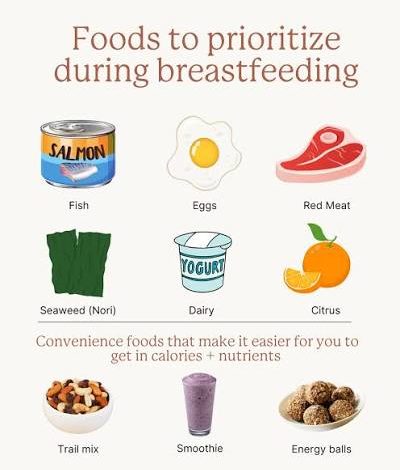
Short on time? Use foods that do two jobs at once. The best dairy-free breastfeeding foods give you energy and nutrients in the same bite.
My practical shortlist:
- Fortified soy milk for protein plus calcium
- Calcium-set tofu for protein plus calcium
- Beans and lentils for protein, fiber, and steady meals
- Eggs if you eat them, because they’re fast and versatile
- Canned salmon or sardines if you eat fish, because they can bring protein and calcium
- Oats for easy breakfasts and snacks
- Nut butters and nuts for calorie-dense snacks
- Tahini and sesame for extra calcium and fat
- Leafy greens as a helpful addition, though I would not rely on them alone for calcium
- Fortified dairy-free yogurt if you tolerate it and it has actual protein
Trade-offs show up fast here. Plant milks vary a lot. Some are fortified, some are not. Some have decent protein, some have almost none. Yogurts can be similar: a few are useful, many are basically expensive dessert. Read the label for protein, calcium, and added sugar rather than trusting the package front.
A good rule: if a food is meant to replace dairy, it should earn that job. If it doesn’t bring protein or calcium, treat it as a beverage or a treat, not a nutritional stand-in, and if you are unsure, consult a clinician or dietitian. For practical label guidance, USDA FoodData Central and NHS breastfeeding advice are useful starting points.
If appetite is low, smoothies can help, but only if you build them carefully. A fruit-only smoothie can look helpful and still leave you hungry an hour later. Better: fortified soy milk, nut butter, oats, fruit, and maybe chia or flax.
Quick check: Are the “dairy-free” foods in your kitchen mostly substitutes with real nutrients, or mostly flavored fillers?
Edge Cases Where the Usual Advice Breaks Down
If your situation is one of these, normal “just eat balanced meals” advice is too vague.
-
You’re vegan, dairy-free, and eating lightly.
What changes: B12, iodine, calcium, protein, and vitamin D need more attention.
What to do instead: Ask a clinician or dietitian to review your food pattern, and rely on fortified foods more deliberately. -
You also avoid soy.
What changes: one of the best plant protein-and-calcium options disappears.
What to do instead: Use beans, lentils, eggs, fish, meat, nuts, seeds, and calcium-fortified alternatives that are soy-free. -
You have a poor appetite or nausea postpartum.
What changes: the problem is often total intake, not just dairy.
What to do instead: Eat small, frequent, calorie-dense foods; keep shelf-stable snacks nearby; use liquids like smoothies or soups if they are easier. -
You suspect multiple food triggers in the baby.
What changes: the diet can become overly restrictive very quickly.
What to do instead: Do not keep removing foods one by one without professional guidance. -
You rely on packaged convenience foods.
What changes: hidden dairy is common, and nutrient quality varies.
What to do instead: Check labels for milk, whey, casein, butter, cream, and ghee, and keep a few clearly dairy-free staples at home. -
You’re not eating eggs, fish, or meat either.
What changes: the plan is no longer just dairy-free; it is much more likely to need structured nutrition support.
What to do instead: Get individualized help rather than trying to patch the diet with random swaps.
Quick check: Is your diet dairy-free, or is it dairy-free plus another restriction that makes nutrient gaps more likely?
A