Breastfeeding meal plan for a day: simple meals and snacks for new moms
Last updated: August 12, 2026
Quick Answer: A breastfeeding meal plan for a day is usually 3 meals + 2 to 3 snacks built around protein, fiber-rich carbs, fluids, and easy foods that fit a tired postpartum schedule. This breastfeeding meal plan day: simple meals snacks new moms guide gives one practical template, but your needs can vary by body size, recovery, and feeding frequency. For a breastfeeding meal plan for a day, I’d keep the formula plain: steady meals, protein at each meal, easy snacks within reach, and plenty of fluids. I write about maternal nutrition and infant-feeding topics for a living, not as a replacement for your clinician, so please speak with a qualified health professional about your own recovery, supply, and any medical restrictions.
Key takeaways
– A practical day usually means 3 meals and 2–3 snacks.
– Protein at breakfast, lunch, and dinner helps meals last longer.
– Convenience foods are a valid postpartum strategy.
– If you have a medical diet, ask a clinician or dietitian before using a template.
– Reliable general guidance is available from MedlinePlus and the Academy of Nutrition and Dietetics.
The goal here is not a “perfect” postpartum diet. It is a realistic day of food that fits a tired body, a busy feeding schedule, and the fact that one-handed eating is a skill now. Messy? Sure. Still workable.
What a breastfeeding meal plan for a day should actually do
A good breastfeeding meal plan for a day should answer one question: What can I eat that helps me feel steady, satisfied, and fed without making my life harder? That is the right question because new moms rarely need culinary ambition. They need food that is fast, filling, and repeatable.
But the breastfeeding meal plan day: simple meals snacks new moms formula works best when it bends to real life. I would build the day around three anchors:
– Protein at breakfast, lunch, and dinner
– Fiber-rich carbs like oats, whole-grain toast, rice, potatoes, fruit, and beans
– Easy fats and fluids so meals last longer and hydration is not an afterthought
That structure matters because breastfeeding commonly leaves people hungry between meals, and many health organizations recommend eating regular meals and snacks rather than waiting until you are depleted. The exact amount of food you need varies with body size, recovery, milk-feeding frequency, and appetite, so there is no single perfect menu. The American College of Obstetricians and Gynecologists and the Academy of Nutrition and Dietetics both emphasize individualized postpartum nutrition rather than one rigid plan.
So a meal plan should not turn into a rulebook. For people with a sensitive stomach, C-section recovery, gestational diabetes follow-up needs, or a food allergy, the plan should change with professional guidance. For general breastfeeding nutrition guidance, I trust resources from the Academy of Nutrition and Dietetics and MedlinePlus from the U.S. National Library of Medicine:
– https://medlineplus.gov/breastfeeding.html
– https://www.eatright.org/health/pregnancy/breast-feeding
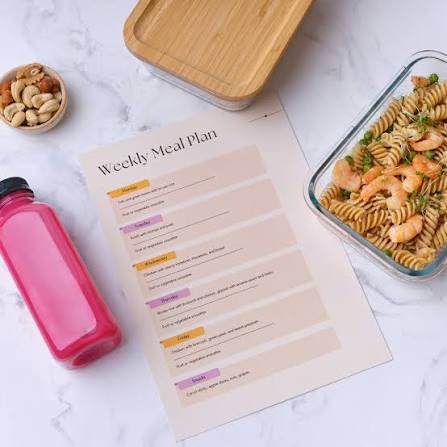
A simple breastfeeding meal plan for a day
This is the version I would hand to a new mom who wants something practical, not precious.
Breakfast
Option: Oatmeal made with milk or fortified soy milk, topped with banana, nut butter, and chia or ground flax
Why it works: Warm, soft, and easy to digest for many people, it gives you carbs, protein, and fat in one bowl. Too tired to cook? Overnight oats work just as well.
Shortcut version: Whole-grain toast with peanut butter and a piece of fruit.
Mid-morning snack
Option: Greek yogurt or a dairy-free yogurt with berries and granola
Why it works: It takes almost no effort and gives you protein early, which can keep you from getting ravenous later.
Not hungry? A banana and a handful of nuts is enough.
Lunch
Option: Turkey, hummus, or egg salad sandwich on whole-grain bread with baby carrots and hummus, plus a piece of fruit
Why it works: Sandwiches are one of the best postpartum foods because they are easy to assemble, easy to eat one-handed, and easy to repeat.
Shortcut version: A grain bowl with rice, beans or chicken, avocado, and prewashed greens.
Afternoon snack
Option: Apple slices with cheese, or crackers with hummus, or a smoothie with milk, yogurt, fruit, and oats
Why it works: This is the snack that often prevents the “I suddenly need to eat everything in the house” feeling at 5 p.m. In cases of diabetes, kidney disease, celiac disease, severe food allergies, or a history of eating disorders, please check with a qualified clinician or registered dietitian before using this as a template; individualized advice matters more than a generic snack list. General nutrition guidance from MedlinePlus and the Academy of Nutrition and Dietetics can help, but they do not replace personal medical care.
Dinner
Option: Salmon or tofu, rice or potatoes, and a simple vegetable like roasted broccoli, green beans, or a bagged salad
Why it works: Dinner should be dependable, not elaborate. A protein, a starch, and a vegetable is enough.
Shortcut version: Rotisserie chicken, microwaved sweet potato, and frozen vegetables.
Evening snack
Option: Cottage cheese with fruit, cereal with milk, or toast with nut butter
Why it works: Night feeds can leave you hungry again. A small snack can be easier than trying to sleep on an empty stomach.
The Real Difference Between a breastfeeding meal plan and just “eating healthy”
The real difference is that a breastfeeding meal plan is built for repeat hunger, fatigue, and convenience. “Eat healthy” sounds nice and falls apart at 2 a.m. when your hands are full and you need food that does not require a full kitchen performance.
A breastfeeding meal plan day: simple meals snacks new moms approach gives you structure without much fuss. It assumes you will forget meals if you do not plan them. Snacks count. Leftovers count. That is not a flaw; that is the point.
The generic “healthy eating” model often gets two things wrong:
1. It is too vague. You need actual meal ideas, not a lecture.
2. It can become restrictive. New moms do not need to chase perfection or cut out entire food groups unless a clinician has told them to.
Honestly, the trade-off is repetition. That is the price of making it usable. If variety is your coping skill, fine. If convenience is your coping skill, repetition is your friend.
Since the goal is to make eating easier, I use this decision point: when your days are chaotic, choose a plan that repeats ingredients across meals. When your appetite is unpredictable, keep snack foods visible and meals simple. For reflux, constipation, or a baby who feeds constantly, individual adjustments matter more than any template. And yes, sometimes the fridge becomes the boss.
The Honest Side-by-Side
| Criteria | Breastfeeding meal plan for a day | “Just eat what sounds good” approach | Winner for new moms with limited energy |
|---|---|---|---|
| Meal structure | Built-in meals and snacks | No structure at all | Breastfeeding meal plan |
| Hunger control | Better chance of staying steady | Easier to under-eat or over-snack | Breastfeeding meal plan |
| Effort required | Can be planned ahead and repeated | Low thinking in the moment, but higher risk of random choices | Breastfeeding meal plan |
| Flexibility | Moderate; can swap foods easily | Very high | “Just eat what sounds good” |
| Grocery simplicity | Easy to shop for in batches | Can become messy and expensive in practice | Breastfeeding meal plan |
| Best use case | Busy postpartum days | Days when appetite is truly unpredictable | Breastfeeding meal plan |
| Risk of restriction | Low if used sensibly | Low, but can drift into skipped meals | Tie |
| Risk of decision fatigue | Lower | Higher over a whole day | Breastfeeding meal plan |
| Works well with leftovers | Yes | Sometimes | Breastfeeding meal plan |
The table point I care about most is this: a plan beats spontaneity when you are sleep-deprived. Spontaneity can sound nourishing and flexible, but it often turns into “I forgot to eat and now I am starving.” That is not a food philosophy; it is a crash.
Breastfeeding meal plan for a day: who should actually use this
This breastfeeding meal plan for a day wins for new moms who need low-friction fuel. For people home with the baby, healing from birth, and trying to avoid skipped meals, this is the right tool. It is also a good fit if you like eating the same breakfast most days and want a short shopping list.
Specifically, I would use this plan if:
– You want meals that can be assembled in minutes
– You have a hard time remembering snacks
– You feel hungry soon after feeding
– You want food that works across the day, not a special postpartum “diet”
The strength here is practicality. Oatmeal, yogurt, sandwiches, rice bowls, roasted vegetables, fruit, nuts, eggs, dairy, beans, fish, tofu, and toast are all easy to find and easy to adapt. Many of them can be made in advance or assembled from store-bought components.
Meanwhile, the weakness is that this plan can feel repetitive if you want novelty or if your appetite is changing daily. It can also feel too heavy if you are dealing with nausea, reflux, or a very low appetite in the early days postpartum. In those cases, smaller and more frequent foods may fit better than three full meals.
This is not the plan for someone following a strict medical diet without individualized advice. If you have diabetes, kidney disease, celiac disease, severe food allergies, or a history of eating disorders, I would not treat a generic postpartum template as enough on its own. Get tailored guidance from a qualified clinician or registered dietitian.
The Specific Situations Where a different approach wins
The simpler, more flexible approach wins when your day is unpredictable in a way no meal plan can fix. In the first days after birth and when full meals are hard to tolerate, forcing a standard breakfast-lunch-dinner pattern may backfire. Smaller, gentler foods may be easier.
For example, a different approach also wins if:
– You are sensitive to certain textures or smells after birth
– You have very little kitchen access
– You rely on family, a partner, or friends for food delivery
– Your clinician has given you a special diet for a medical reason
In those cases, the right move is not “try harder.” It is to lower the bar. Soup, crackers, yogurt, toast, fruit, smoothies, rice, eggs, and pre-cooked proteins can carry a day. Leftovers and store-bought convenience foods can too. I would rather see a new mom eat a modest, workable mix of foods than wait for an ideal meal that never happens.
The weakness of the flexible approach is obvious: it depends on remembering to eat. That is where the wheels come off for many tired parents. For people who forget meals when the baby needs you every hour, a loose plan is too loose.
Our Verdict: Which One to Choose and Why
Choose the breastfeeding meal plan for a day if you want a simple structure that keeps you fed without constant decisions. Choose a looser, more flexible approach if nausea, sensory changes, or a medical diet make fixed meals unrealistic. Neither if you are using food rules to compensate for a serious postpartum health issue — speak with a qualified professional instead.
So my recommendation is the structured plan for most new moms. It is the better default because it protects you from the most common problem: not eating enough often enough. You do not need gourmet meals. You need repeatable food that shows up on time.
If I were building a real-life day for a new mom, I would keep the same core foods in rotation:
– Oatmeal or toast for breakfast
– Yogurt, fruit, nuts, or cheese for snacks
– Sandwiches or bowls for lunch
– Simple protein, starch, and vegetable for dinner
– One easy evening snack
That is not fancy. It is useful. Useful wins when sleep is broken and time is short.
When to Reconsider This Choice Entirely
I would step back from any generic breastfeeding meal plan if any of these are true:
-
You are losing weight very quickly or feel weak, dizzy, or unwell.
Food structure alone is not the answer. You need clinical input. -
You have a medical condition that changes your nutrition needs.
Examples include diabetes, thyroid disease, kidney disease, celiac disease, or a postpartum complication. -
You have a history of disordered eating.
A rigid meal plan can feel controlling rather than supportive. -
You are breastfeeding and pumping but still feel persistently hungry, thirsty, or depleted.
That pattern deserves individualized advice rather than guesswork.
The point is not to panic. The point is to notice when a template stops being helpful. A good plan supports recovery. It should not become another source of stress.
FAQ
What should I eat first thing in the morning while breastfeeding?
A breakfast with protein, carbs, and fat is a good starting point. Oatmeal with nut butter, yogurt with fruit, or eggs with toast are all practical options.
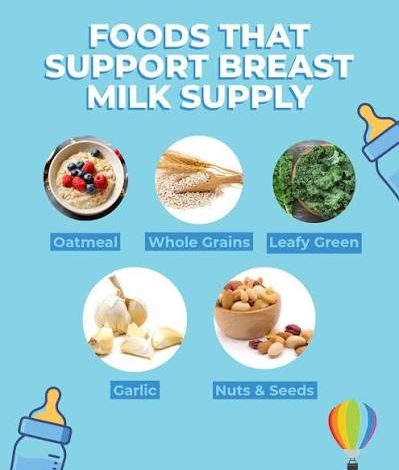
Do I need special “lactation foods”?
Not necessarily. Many people do fine with ordinary balanced meals and snacks. Some foods are commonly suggested, but research is mixed and individual response varies. For general breastfeeding basics, see MedlinePlus: https://medlineplus.gov/breastfeeding.html
How many snacks should I have in a day?
There is no one right number. Many new moms do better with one or two snacks between meals, especially if hunger ramps up after feeds. The Academy of Nutrition and Dietetics also recommends individualized postpartum eating patterns: https://www.eatright.org/health/pregnancy/breast-feeding
Is it okay to rely on convenience foods?
Yes. Convenience foods can be part of a reasonable postpartum plan. Rotisserie chicken, frozen vegetables, pre-cut fruit, yogurt, oatmeal, and sandwiches can all help you stay fed.
What if I am not very hungry while breastfeeding?
That can happen, but if it is persistent or you feel unwell, speak with a qualified clinician. In the meantime, smaller frequent foods may be easier than big meals.