Postpartum Meal Planning and Food Prep Systems
Last updated: November 01, 2026
Quick Answer: the most workable postpartum meal planning and food prep systems usually rely on a hybrid setup, with a short list of repeat meals, a stocked pantry, a few fridge-ready components, and some freezer backup for the first 2 to 6 weeks home. Postpartum meal planning and food prep systems are most useful when they reduce decision-making while you are sleep-deprived, healing, bleeding, and feeding a newborn on a two-to-three-hour cycle.
If you are trying to feed yourself after birth, the real problem is not “healthy eating” in the abstract. It is getting enough food into your body when one hand is often occupied, your energy is fragmented, and your cooking window may be 10 minutes long. The right postpartum meal planning and food prep systems turn that chaos into repeatable meals, a stocked kitchen, and a plan for the first 2 to 6 weeks home.
Key takeaways
- A practical postpartum meal planning and food prep systems approach is not a menu; it is a repeatable system with a short shopping list, a few batch-cooked anchors, and emergency meals that need almost no assembly.
- The most useful foods are the ones that combine protein, starch, fruit or vegetables, and fat in one container or one-handed format.
- A full freezer-cooking marathon is useful for some families, but it is not required and can become a burden if storage space is tight or your appetite changes after birth.
- The most practical setup is usually a hybrid: some freezer meals, some shelf-stable backups, and fresh items that can be eaten cold or microwaved.
- If you are recovering from a C-section, managing anemia, dealing with nausea, or breastfeeding with intense hunger, the system needs even more convenience and fewer “recipes.”
- The wrong system is one that depends on motivation, complicated ingredients, or a perfect prep day right before delivery.
What postpartum meal planning is actually trying to solve
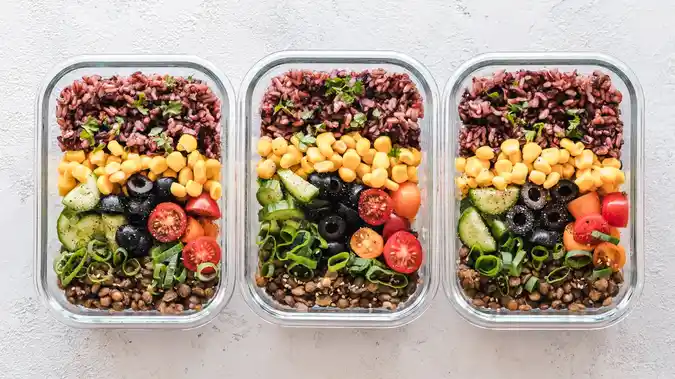
Postpartum meal planning is trying to solve one thing: how to keep you fed when the normal rhythm of cooking has disappeared.
That matters more than people admit. After birth, the issue is not just hunger. It is timing, fatigue, incision pain or perineal soreness, surprise visitors, and a baby who may decide your dinner hour is also a crying hour. A good plan reduces the number of times you have to ask, “What can I eat right now?” and replaces that with, “I have three options that work.”
A good postpartum food system should do five jobs at once:
- Provide enough calories and protein. Many people need meals that feel substantial, not “light.”
- Reduce prep steps. One-pan, one-bowl, or no-cook meals win.
- Handle unpredictable hunger. Breastfeeding and recovery can make appetite spike suddenly.
- Support healing. Iron-rich foods, fluids, fiber, and enough fat matter more than trendy ingredients.
- Prevent decision fatigue. Repetition is helpful here. Variety is optional.
The best plans are not elaborate; they rely on a short list of meals that can be rotated, doubled, and eaten at odd hours. A plan that looks beautiful on paper but needs 12 ingredients and a fresh herb garnish will fail at 3 a.m.
This is also where the generic advice often goes wrong. It tells people to “stock the freezer” as if freezer space were unlimited and every family wants casseroles. Some do. Others need burritos, muffins, soup, rice bowls, or components that can be mixed and matched. The right system depends on your kitchen, your appetite, and whether you want to cook once a week or not at all.
For food safety basics on storage and reheating, the USDA Food Safety and Inspection Service and the FDA FoodKeeper resource are both useful references.
How do I build a postpartum meal plan that actually works?
The fastest way to build a workable postpartum meal plan is to choose 3 breakfast options, 3 lunch or dinner options, 3 snacks, and 2 emergency meals, then repeat them for the first month.
That sounds simple because it should be simple. Complexity is what breaks postpartum planning. You do not need 30 recipes. You need a rhythm.
Start with this structure:
- Breakfasts: overnight oats, egg muffins, yogurt bowls, breakfast burritos, or toast with nut butter and fruit
- Lunches/Dinners: soup, chili, pasta bake, rice bowls, sheet-pan chicken and vegetables, pulled meat, lentil curry
- Snacks: trail mix, cheese and crackers, fruit with nut butter, hummus with pita, protein bars, muffins
- Emergency meals: frozen burritos, microwave rice with canned beans, ready soup, rotisserie chicken with bagged salad
Then decide how many days you need to cover. For many families, the useful window is the first 2 to 4 weeks, not a full 3-month project. The first week is usually the hardest. The second and third weeks often still require support, but appetite and routine may start to normalize.
The most efficient planning method is to anchor meals around foods that share ingredients. For example:
- Roast chicken becomes tacos, rice bowls, and soup.
- Ground turkey becomes chili, pasta sauce, and stuffed peppers.
- Cooked rice becomes bowls, fried rice, and soup add-ins.
- Yogurt becomes breakfast, snack, and smoothie base.
That kind of overlap matters because it cuts waste. It also makes grocery runs easier. If the same spinach goes into eggs, soup, and pasta, you are less likely to end up with random half-used ingredients rotting in the crisper drawer.
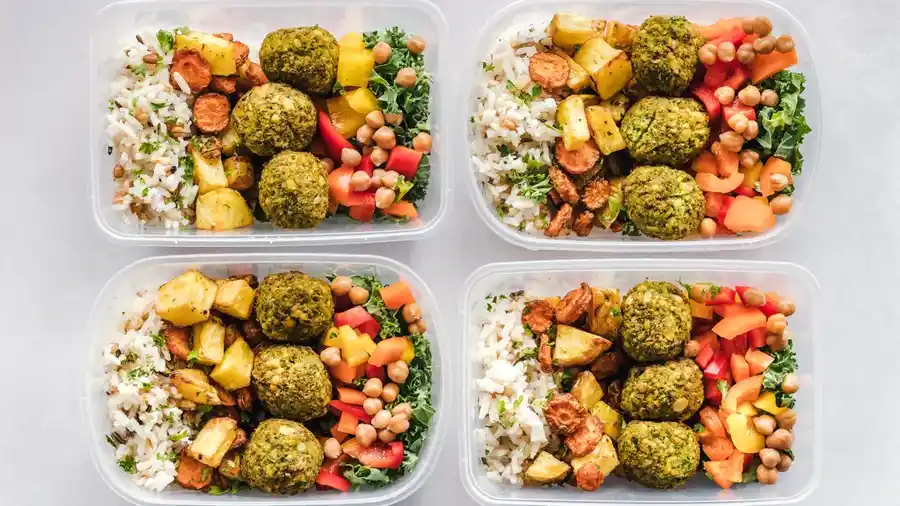
A smart postpartum plan also includes foods that hold up well when reheated. Casseroles can work, but they are not mandatory. Many people do better with components stored separately: rice in one container, protein in another, sauce in a jar, vegetables in a third. That lets you assemble a meal without committing to one flavor for three days straight.
The biggest drawback of this system is that it still requires some planning before birth. If you are exhausted or have pregnancy complications, even a simple plan can feel like work. In that case, a very short list of groceries and a few purchased convenience foods is often the most realistic option, not a grand prep project.
Freezer meals, fridge meals, or pantry backups?
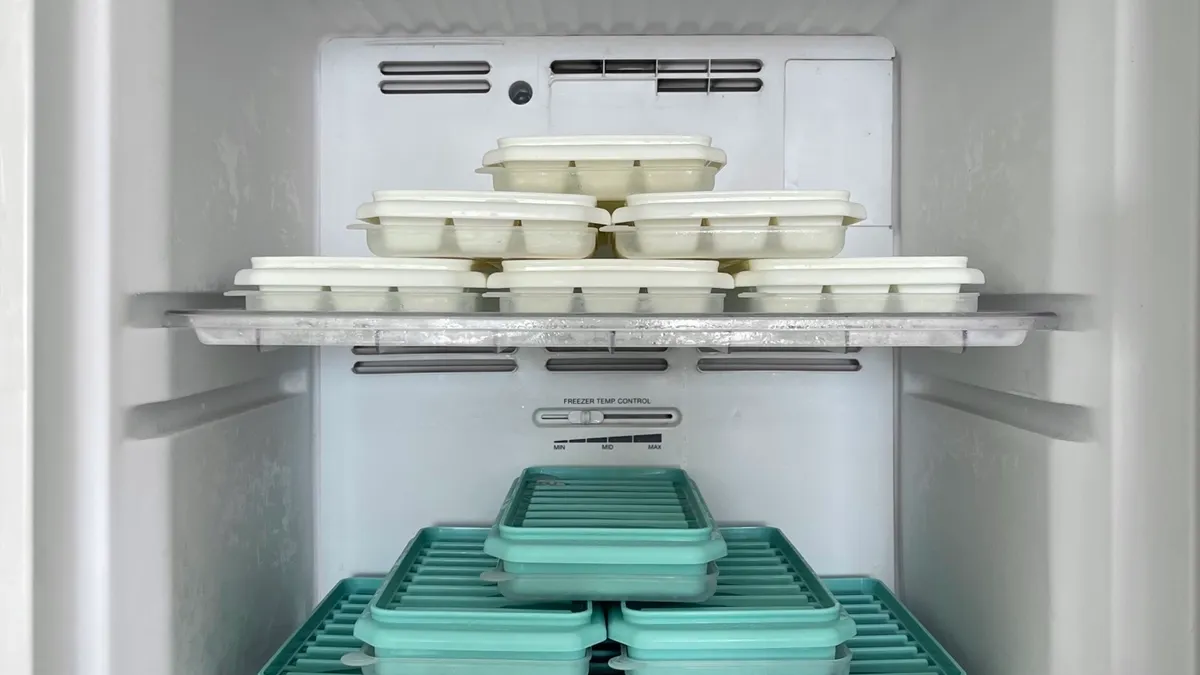
The best postpartum setup is usually a hybrid, because relying on only one storage method creates avoidable failures.
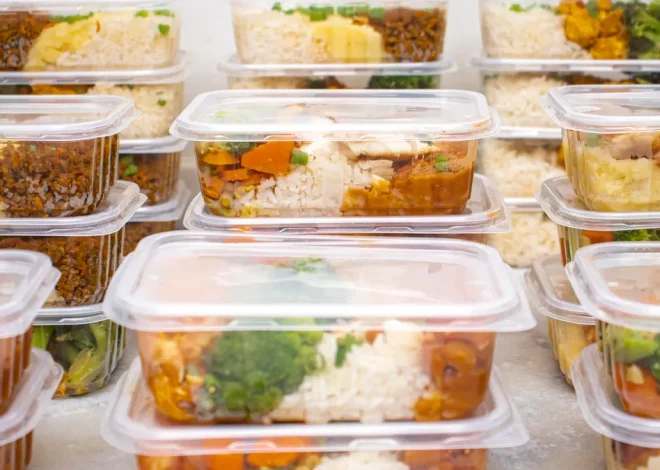
Freezer meals win when you want to front-load labor before birth and you have enough freezer space. They are especially useful for soups, stews, casseroles, burritos, meatballs, and cooked grains. The main advantage is obvious: once the food is made, it waits for you. The main drawback is just as obvious: freezer space is finite, and some foods lose texture after thawing. Pasta can go soft, cream sauces can separate, and vegetables can turn watery.
Fridge meals win when you want food you can eat in the next 3 to 5 days. This is the most underrated category. Think cooked chicken, chopped vegetables, hard-boiled eggs, hummus, rice, salsa, shredded cheese, cooked grains, and washed fruit. These are not glamorous, but they are fast. The downside is that they spoil quickly, so fridge meals work best when you know exactly what will get eaten first.
Pantry backups win when cooking disappears entirely. Canned beans, tuna, salmon, soup, pasta, jarred sauce, boxed grains, nut butter, shelf-stable milk, oats, crackers, and instant mashed potatoes can keep you fed without a single chopping board. Pantry meals are the least romantic option and often the most practical one. They are also the best insurance against a broken plan.
If I had to choose one category for a newborn household, I would not choose freezer meals alone. I would choose pantry plus fridge, with a smaller freezer reserve. That mix handles surprises better. A freezer-only plan fails if you run out of room or cannot remember what is buried in the back. A pantry-only plan can become monotonous. The hybrid gives you resilience.
Here is the trade-off: freezer cooking takes more time before birth, while pantry and fridge systems demand more restocking after birth. If your support person can shop, the hybrid becomes even more effective. If nobody can shop, build more pantry shelf into the system.
What foods belong on a postpartum grocery list?
The best postpartum grocery list is built around protein, starch, fruit or vegetables, and easy fats, not around “superfoods.”
That means the list should be practical first. A useful list often includes:
- Eggs
- Greek yogurt or another high-protein yogurt
- Oats
- Bread or tortillas
- Rice or quinoa
- Pasta
- Potatoes or sweet potatoes
- Beans and lentils
- Canned tuna or salmon
- Rotisserie chicken or cooked poultry
- Ground meat or tofu
- Cheese
- Nut butter
- Hummus
- Frozen vegetables
- Bagged salad
- Fresh fruit that is easy to eat by hand
- Soup
- Broth
- Crackers
- Trail mix
- Milk or fortified milk alternative
This is not about perfect nutrition labels. It is about coverage. A postpartum pantry should make breakfast, lunch, and dinner possible even when a grocery trip does not happen for several days.
A few specific combinations are especially useful:
- Eggs + toast + fruit for a fast breakfast
- Yogurt + oats + nut butter for a no-cook meal
- Rice + beans + salsa + cheese for a filling bowl
- Soup + bread + cheese for a simple lunch
- Tortilla + chicken + avocado for a one-handed wrap
- Pasta + jarred sauce + spinach for dinner with almost no prep
If you are breastfeeding, many people find that protein and carbs together are easier to sustain than a plate full of only vegetables. That is not a moral failure. It is basic fuel management.
There are also foods that sound healthy but are awkward in the early postpartum period: elaborate salads that need chopping, dry protein snacks that leave you thirsty, or dishes with too many separate components. A salad can absolutely be useful, but not if it requires a knife, a cutting board, three toppings, and a dressing you forgot to buy.
One more honest point: if you have pregnancy-related or postpartum medical issues such as gestational diabetes, anemia, hypertension, or food restrictions, the grocery list may need adjustment from a clinician or dietitian. General postpartum advice does not replace medical guidance.
For authoritative food-safety guidance, the U.S. Food and Drug Administration’s FoodKeeper resource is useful for storage times and handling basics, and the USDA’s Food Safety and Inspection Service has practical guidance on refrigeration and reheating. For postpartum recovery and warning signs, the American College of Obstetricians and Gynecologists is a reliable reference point.
What should a postpartum prep day actually look like?
A postpartum prep day should be short, repeatable, and focused on components, not on producing a whole week of identical casseroles.
The most workable prep day is usually 2 to 4 hours, not an entire exhausting weekend. The point is to create a head start, not to become a caterer.
A strong prep day often includes these moves:
- Cook one or two proteins. For example, bake chicken thighs, brown ground turkey, or cook lentils.
- Make one starch. Rice, quinoa, pasta, roasted potatoes, or oats.
- Prepare one vegetable. Roasted carrots, frozen broccoli, chopped cucumbers, or a simple soup base.
- Assemble 2 to 3 grab-and-eat snacks. Muffins, egg bites, trail mix portions, yogurt cups, or cut fruit.
- Set aside emergency food. Put several meals where they are easy to see, not buried behind ice cream or old leftovers.
A lot of people go wrong by trying to make too many recipes from scratch. That creates dish overload, labeling confusion, and a kitchen that looks productive but is hard to use. Component prep is usually better than recipe prep because it gives you flexibility. If you can mix cooked rice with eggs one day and chicken the next, you are not trapped in one flavor.
Labeling matters more than it seems. Put the food name and date on the container. If the plan depends on memory, the plan is too fragile. This is especially true for the freezer, where mystery containers breed quickly.
A useful prep-day rule: if a task takes longer than 15 minutes and does not improve a meal substantially, skip it. Pre-washing fruit is worth it. Making a complicated sauce from five fresh herbs is not.
The limits are real. Prep day is hardest for people with late-pregnancy discomfort, mobility limits, or no help at all. In that case, the answer is not “try harder.” The answer is to buy more prepared food, simplify the menu, or ask someone else to batch-cook.
The best postpartum meal systems for different households
The best postpartum meal system is the one that matches your support level, storage space, and tolerance for repetition.
If you want the least mental load
Choose a repeat-and-rotate system. Pick 5 core meals and eat them on a loop for 2 weeks. This works well if you hate planning and do not care about novelty. The strength is simplicity. The weakness is boredom, especially if the same textures show up too often.
If you have a full freezer
Choose a batch-freeze system. Cook double portions before birth and freeze them in meal-size containers. This is excellent for families who want immediate post-birth convenience. The weakness is storage pressure. If your freezer is small, this system can backfire fast.
If you have limited help after birth
Choose a pantry-first system with fresh add-ons. Stock foods that survive a missed grocery trip and only add fresh produce when possible. This is the safest system when nobody is available to cook or shop regularly. The weakness is taste fatigue if you do not rotate sauces, grains, and proteins.
If you have a partner or family member who can cook
Choose a component system. One person handles bulk prep and the other handles assembly and cleanup. This is often the most flexible approach because it can adapt day by day. The weakness is coordination; if roles are unclear, food prep becomes another source of friction.
If you are recovering from a C-section
Choose a minimal-bending system. Heavy pots, low freezer drawers, and complex stovetop cooking are poor fits. Favor foods that can be lifted, microwaved, or eaten cold. The drawback is that some traditional meal-prep tasks become annoying or painful, so the whole kitchen setup may need to change temporarily.
For postpartum guidance on physical recovery and warning signs, the American College of Obstetricians and Gynecologists is a reliable reference point. For nutrition basics, the Academy of Nutrition and Dietetics publishes practical postpartum resources.
The honest side-by-side: freezer-heavy versus hybrid meal prep
The hybrid system wins for most households because it is more forgiving, but a freezer-heavy system still has a place when labor before birth is your main constraint.
| Criteria | Freezer-heavy system | Hybrid system | Winner for condition |
|---|---|---|---|
| Up-front effort before birth | High, because several meals must be cooked and packaged at once | Moderate, because only some meals need to be frozen | Hybrid, if energy before delivery is limited |
| Reliability during sleep deprivation | Good if meals are clearly labeled and easy to reheat | Better, because there are fridge and pantry backups too | Hybrid, if routines will be chaotic |
| Storage demand | High freezer-space demand | Lower, because food is spread across fridge, freezer, and pantry | Hybrid, if space is tight |
| Texture after reheating | Can be uneven for pasta, vegetables, and creamy sauces | More flexible because fresh and stored foods can be combined | Hybrid, if texture matters |
| Variety over 2 to 4 weeks | Often repetitive unless many recipes are made in advance | Usually better because fresh components can change the meal | Hybrid, if boredom is a concern |
| Emergency backup if plans fall apart | Weak if the freezer is full or unorganized | Strong because shelf-stable food is part of the plan | Hybrid, if surprises are likely |
| Best fit for batch cooks | Yes, especially for soups, burritos, and casseroles | Yes, but not required | Freezer-heavy, if batch cooking is the goal |
| Best fit for low-bending recovery | Sometimes awkward if containers are stored low | Better because more food can be kept at arm level | Hybrid, if movement is limited |
The table points to the same conclusion: the hybrid system is the better default for most postpartum households. It gives you more ways to recover from a bad night, a missed grocery run, or a sudden appetite shift. The freezer-heavy system still wins when the main goal is to cook everything before the baby arrives and then touch the kitchen as little as possible afterward.
When does the recommendation flip?
The recommendation flips when storage, recovery, or support changes the problem more than the food itself.
Flip 1: You have very little freezer space.
A freezer-heavy system stops being helpful if you are already sharing a small freezer with breast milk bags, ice packs, and regular groceries. In that case, a pantry-plus-fridge system is better. A few frozen meals are fine; a whole strategy is not.
Flip 2: You are recovering from abdominal surgery or major pelvic pain.
If bending, lifting, or standing at the stove is difficult, the best system is the one that minimizes equipment handling. That can mean more shelf-stable meals, more room-temperature snacks, and more meals assembled at counter height. Comfort and mobility matter more than batch volume.
Flip 3: You have reliable daily help.
If a partner, parent, or postpartum doula is handling cooking or assembly, the value of batch-freezing drops. A person in the house who can make eggs, rice, soup, or sandwiches changes the equation. The system can be fresher, simpler, and less dependent on pre-birth labor.
Flip 4: Your appetite is hard to predict.
Some people are ravenous after birth. Others are nauseated, especially early on or after a difficult delivery. If appetite is unpredictable, a hybrid system is better because it offers small snacks, cold foods, warm meals, and packaged backups. A giant stack of identical frozen casseroles is a poor fit when you do not know what you will want.
That is the honest cutoff: the more variable your recovery, the less you should rely on any single prep style.
The verdict: which postpartum meal system should you choose?
Choose the hybrid postpartum meal system if you want the safest default, have limited sleep, and need food that can survive missed cooking days. Choose the freezer-heavy system if you have the time, freezer space, and desire to batch-cook before birth and you know your household will actually eat reheated meals. Neither if your plan depends on elaborate recipes, a cramped freezer, or a prep day you do not realistically have.
That is the call I would make for most readers: build a hybrid. Make a few freezer meals, keep the pantry stocked, prep a few fridge components, and keep emergency food visible. The goal is not culinary perfection. The goal is to make sure that at 2 p.m. and 2 a.m., food is already decided.
A simple 7-day postpartum food structure you can copy
A simple 7-day structure works better than a highly detailed menu because it preserves flexibility while still giving the household a rhythm.
Here is a practical pattern:
- Breakfast: eggs, toast, and fruit on two days; yogurt and oats on two days; breakfast burritos on one day; repeat as needed
- Lunch: soup or chili on two days; rice bowl on two days; sandwich or wrap on one day; leftovers whenever possible
- Dinner: sheet-pan protein and vegetables on two days; pasta on one day; grain bowl on one day; a freezer meal on one day
- Snacks: trail mix, cheese and crackers, fruit, hummus, muffins, or bars every day
The point of this structure is not precision. It is coverage. If one meal gets skipped because the baby will not settle, the whole day does not collapse.
A reader who wants more structure can turn this into a rotation:
- Monday: prep one protein
- Tuesday: use leftovers
- Wednesday: soup or chili
- Thursday: cold lunch
- Friday: pasta
- Saturday: freezer meal
- Sunday: restock pantry and fruit
That sort of rhythm works because it reduces the number of times you have to invent dinner from scratch. It also makes grocery shopping more efficient: you are buying for roles, not for recipes.
What most postpartum meal plans leave out
Most meal plans leave out the part that matters most: how the kitchen will function when nobody has the energy to “make” a meal.
That means a real plan should include:
- paper plates or a reduced-dish setup if dishwashing becomes a bottleneck
- water bottles or a carafe placed where feeding happens
- easy access to utensils, napkins, and snack bins
- one-hand foods for nursing or holding a baby
- clear labeling for leftovers and frozen portions
- a backup list for takeout or grocery delivery if the system breaks
It also means being honest about what you will not cook. Postpartum is not the time to protect an identity as a “from-scratch family” if that identity makes people hungry. Prepared food, rotisserie chicken, and packaged soups are not failures. They are tools.
The best postpartum meal planning and food prep systems are not the most ambitious ones. They are the ones that keep working after the baby comes home, after the first visitor leaves, after the first night of broken sleep, and after your plans collide with reality.
If a system can do that, it is doing the job.
Drafted with AI; not yet reviewed by a person.